Trinity River Authority CEMP Development
Project Overview
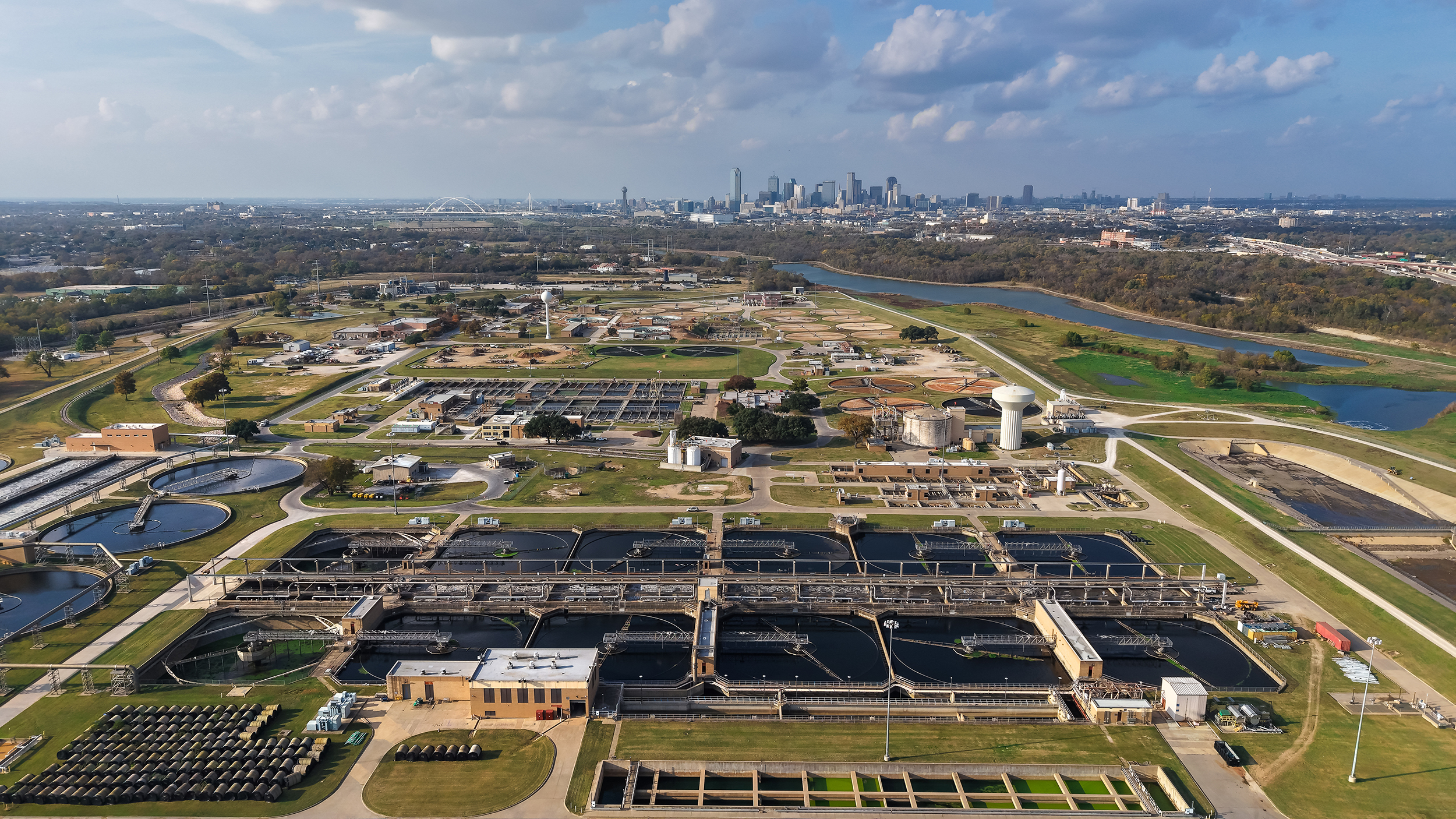
The Trinity River Authority of Texas (TRA) is a conservation and reclamation district responsible for providing water and wastewater treatment along with recreation and reservoir facilities for an 18,000-square-mile region spanning the Trinity River basin. With its diverse portfolio of critical infrastructure, TRA has decades of experience developing and maintaining emergency plans designed to protect public health, while also ensuring operational continuity and supporting communities that depend on its services. With facility-specific and hazard-specific emergency plans already in place, Hagerty was tasked with unifying efforts under a single, scalable framework and initiating the development of a Comprehensive Emergency Management Plan (CEMP). Our goal was to provide an Authority-wide, all-hazards approach to every stage of the emergency management cycle.
Understanding the Mission
TRA’s operations cover a large geographic area and encompass diverse functions across individual facilities with response and action plans tailored to their own specific operational intricacies. Due to this, a shift needed to be made from facility-centric planning to an Authority-wide, all-hazards framework. Hagerty’s and TRA’s stakeholder engagement efforts emphasized that the CEMP was not intended to replace existing facility-level plans, but rather to establish a planning hierarchy in which plans would continue to serve as the operational foundation for facility-specific incidents. The CEMP would need to provide the overarching framework for coordination, decision-making, resource management, and executive-level response activities that remain consistent regardless of incident type or location.
The Hagerty Approach
By working closely with TRA personnel throughout plan development, Hagerty validated Authority-wide emergency management processes, fostered organizational ownership of the CEMP, and developed a plan that is both strategically aligned and operationally practical. The planning process emphasized an iterative and targeted engagement process. Through regular coordination with the TRA project team, subject matter experts were asked to review and refine sections of the plan directly related to their responsibilities. This approach streamlined the review process, reduced stakeholder burden, and ensured that operational knowledge from across the Authority was incorporated into the final product.
Following finalization of the CEMP, Hagerty supported TRA through a series of introductory and implementation-focused sessions designed to familiarize stakeholders with the plan’s structure, purpose, and practical application. These sessions demonstrated how the CEMP complements existing facility-specific emergency plans while establishing a cohesive, Authority-wide framework for coordinating complex incidents. The training also reinforced that the plan enhances—rather than replaces—existing procedures and responsibilities.
A defining feature of the CEMP was the development of a customized Incident Command System (ICS) organizational structure tailored specifically to TRA’s operational environment. Rather than applying a generic ICS model, Hagerty worked with TRA to align ICS principles with the Authority’s existing organizational structure and terminology. This approach preserved the integrity of the nationally recognized ICS framework while adapting it to reflect how TRA operates. By integrating ICS into the Authority’s operational reality, the CEMP enhances TRA’s ability to implement a coordinated, multi-facility response using familiar roles, terminology, and reporting relationships, without requiring staff to translate unfamiliar structures during high-stress events.
Achieving Results
The resulting CEMP provides a clear and unified, all-hazards framework that strengthens coordination across TRA’s geographically dispersed operations.
Key outcomes include:
- Enhanced ability to respond to and recover from complex incidents requiring multi-facility coordination.
- Improved operational readiness through a customized Incident Command System (ICS) organizational structure aligned with TRA’s operational environment.
- Greater consistency and coordination across Authority-wide emergency management activities while preserving facility-level planning.
- Support for compliance with the America’s Water Infrastructure Act (AWIA) Section 2013 and Safe Drinking Water Act (SDWA) Section 1433 emergency response planning requirements.
- A foundational Emergency Response Plan (ERP) that aligns Authority-wide preparedness efforts with federal regulatory requirements.
Together, these outcomes have bolstered TRA’s readiness posture by preserving the strengths of facility-level planning while enabling coordinated, Authority-wide response when it is needed most.
Contracts
-

Continuity of Operations Planning for BJC Health System
Hagerty helped BJC Health System develop a unified COOP Plan to sustain critical patient care and resilience. -
Improving Regional Resilience in NYC Through THIRA/SPR
Hagerty partnered with NYCEM to deliver a streamlined THIRA/SPR process that strengthened regional preparedness across the NYC Urban Area.
-
Active Threat Cohort Training
Hagerty developed an active threat cohort-based training for Cook County, Illinois, integrating the whole community.