According to the National Interagency Fire Center (NIFC), as of Tuesday, August 25, 86 uncontained large active wildfires have collectively burned 3,631,275 acres across the country this summer. Extreme fire behavior has been reported in several geographic areas, including the Western United States (US). There, fire activity has been amplified by higher-than-average temperatures. States experiencing the highest volume of wildfire activity include Oregon and Washington, both with 15 active fires, followed by Montana (11), Idaho (10), and Nevada (5). In Nevada, crews continue working to suppress the Hawk Fire, which has injured at least six people, damaged or destroyed at least 38 homes, and prompted widespread evacuations.
Overall, this year has been record-breaking for wildfires across the country. The NIFC reports that as of Tuesday, August 25, 51,063 wildfires have burned over 7.8 million acres to date this year. This represents 166 percent of the 10-year average for acres burned and 129 percent of the average for total fires. For comparison, roughly four million acres had burned by August 2025, meaning this year’s current total is nearly double what NIFC recorded at the same point last year.
Additionally, wildfire smoke is impacting air quality across the Northwest US, raising health concerns for numerous communities.
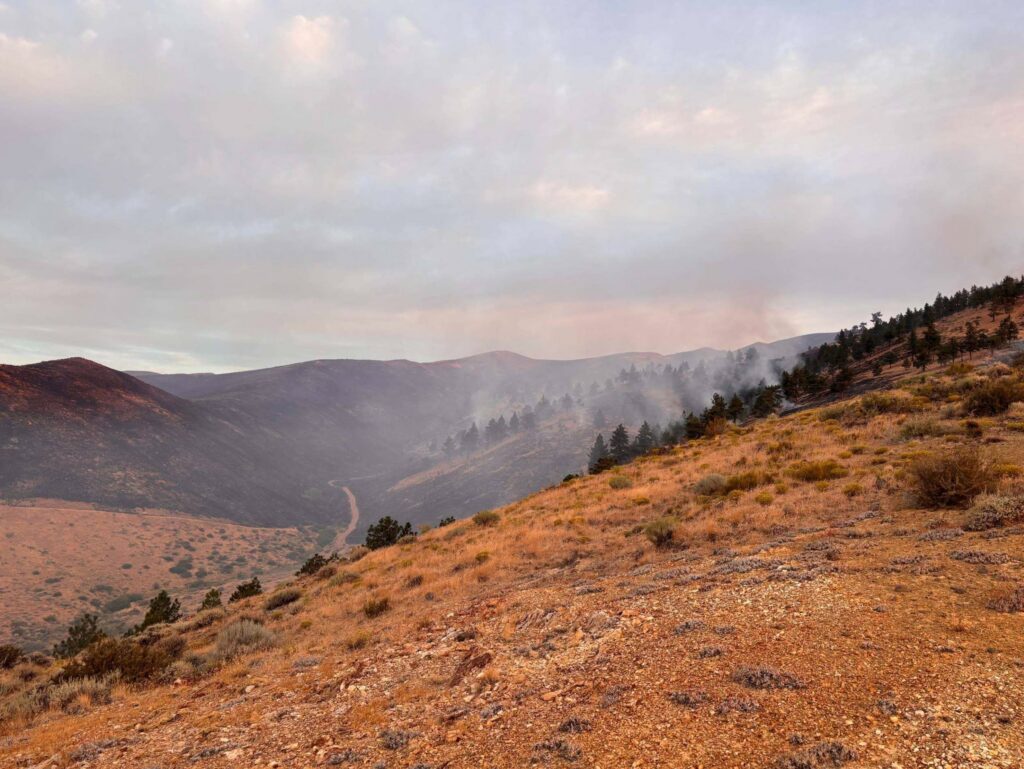
Facebook: Hawk Fire
Hawk Fire
As of Tuesday, August 25, the Hawk Fire—located northwest of Reno, near Verdi, Nevada—has burned 15,051 acres and is 27 percent contained. The human-caused fire was ignited on Saturday, August 22. On the day the fire began, Nevada Governor Joe Lombardo declared a state of emergency in Washoe County as the Hawk fire spread rapidly. By Monday, August 24, schools across Washoe County were closed due to widespread evacuations across the region. As of Tuesday, August 25, tens of thousands of residents in Washoe County remain under Level 3 “Go Now” evacuation orders as the blaze continues to spread.
The fire has resulted in infrastructure damage across the region as well. Nevada (NV) Energy officials report over 100 power poles have been damaged in the Washoe County area, complicating ongoing power restoration efforts. As response and suppression efforts continue, officials warn that hot, gusty, and critically dry conditions are expected to fuel active fire behavior through Thursday, August 27.
Pacific Northwest
This year, Idaho, Oregon, and Washington are each experiencing historic wildfire seasons. In Idaho, by mid-August officials reported more than 700,000 acres have burned throughout the state this year, a sharp increase from nearly 243,000 acres at the end of July. In Oregon, the state has broken its record for total acreage burned in a year, with more than 2.6 million acres burned in 2026 so far. Washington has also recorded more than 800,000 acres burned to date this year. This is the state’s third-worst fire season from an acres burned perspective since 2015.
National Fire News 8/24/26: Yesterday, 174 new fires were reported nationwide, including 12 new large fires. Firefighters are currently working to contain 86 large fires. 22,085 firefighters and support personnel are assigned. More: https://t.co/P0MN7E7yvG 📷Inciweb pic.twitter.com/c0hPMUM8o6
— National Interagency Fire Center (@NIFC_Fire) August 24, 2026
X: NIFC
Wildfire Smoke Effects Air Quality
As of Tuesday, August 25, Air Quality Alerts are in effect for parts of Oregon and Washington due to high concentrations of smoke particulates from wildfire smoke. In areas of western Idaho and central Washington, communities are experiencing levels in the Unhealthy to Hazardous range, with the city of Leavenworth, Washington, recording levels up to 846 as of Tuesday, August 25. The Air Quality Index (AQI) is a data driven system that measures air pollution on a scale of zero to 500. A value between zero and 50 is considered to have little or no health risk, while anything above 200 or 300 is considered very unhealthy or hazardous, respectively, increasing the risk of health effects for everyone.
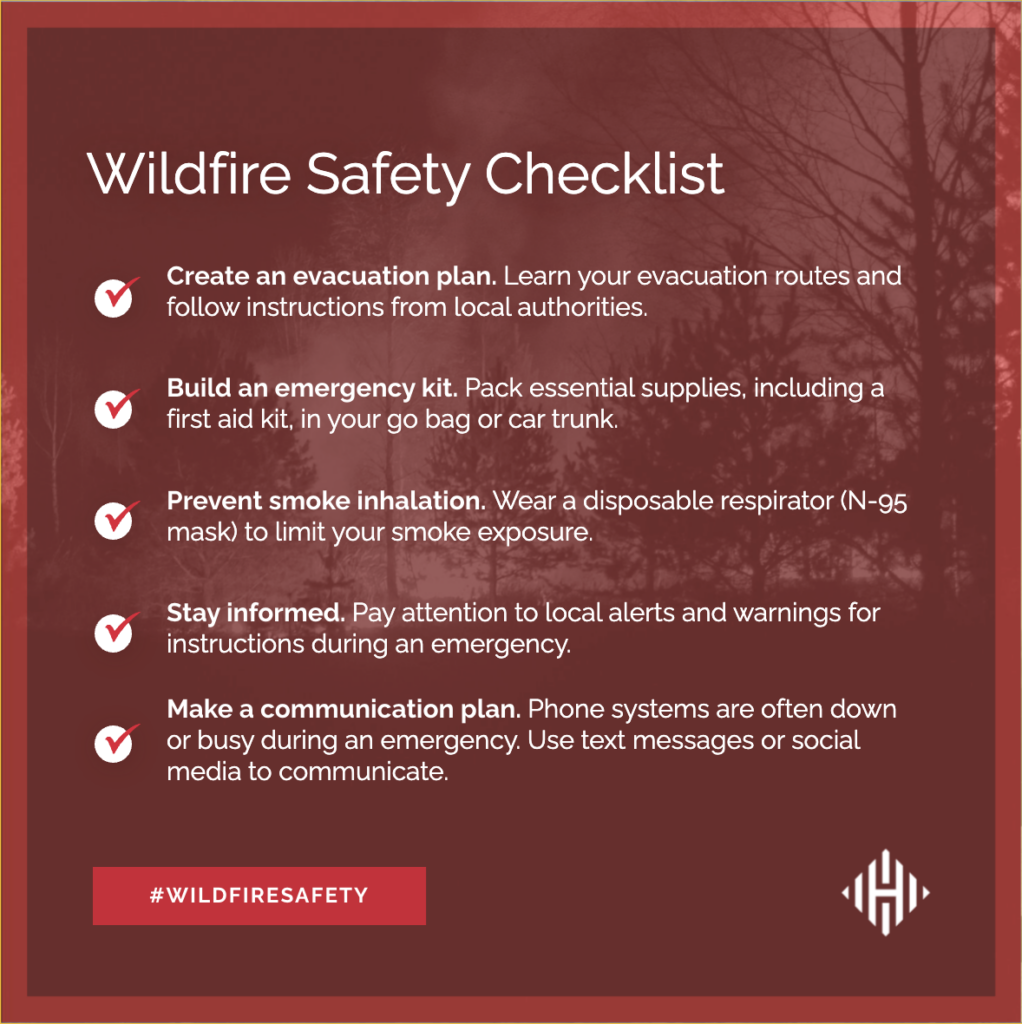
Know Your Risks, Be Prepared.
Wildfires are a year-round threat that can occur anywhere in the country, often spreading rapidly and changing conditions with little warning. FEMA urges individuals and communities to take preventive measures with protecting their property and loved ones in the event of a wildfire emergency.
To stay safe during a wildfire, pay close attention to emergency alerts and notifications, evacuating immediately if instructed by authorities. Keep track of fires in or near your area by listening to the Emergency Alert System (EAS) and NOAA Weather Radio for emergency alerts and using AirNow’s Fire and Smoke Map and NOAA’s Fire Weather Outlook.
According to AirNow, the biggest health risk of wildfire smoke is fine particles. These microscopic particles can get into your eyes and respiratory system, where they can cause health problems such as burning eyes, runny nose, and pulmonary illnesses such as bronchitis. Fine particles can also aggravate chronic heart and lung diseases. To help protect against wildfire smoke, the Centers for Disease Control and Prevention (CDC) suggests monitoring your community’s outdoor air quality, staying inside if advised to by authorities. Keep smoke outside by designating a room you can close off from outside air, setting up a portable air cleaner or a filter, and avoid burning anything indoors as much as possible. If you must go outside, wear a National Institute of Occupational Safety and Health (NIOSH) approved respirator to reduce your smoke exposure and be sure to monitor health symptoms.
Stay Updated and Learn More Here:
- Visit John’s Hopkins Medicine for more information on protecting yourself and your community from poor air quality.
- Learn more about how to safely and efficiently evacuate during wildfires.
- Hagerty will continue to provide guidance on making effective preparations for long-term recovery and continue our situational updates. Consider subscribing to Hagerty’s monthly newsletter for ongoing updates on wildfire activity nationwide.